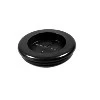
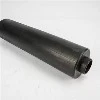
Silicone products,with their unique physical and chemical properties,have permeated various aspects of daily life,from kitchen utensils and medical devices to electronics and industrial components.Their versatility is increasingly evident.This material combines characteristics such as high-temperature resistance,environmental friendliness,non-toxicity,flexibility,and durability,enabling it to withstand extreme temperatures while remaining harmless in direct contact with the human body.For instance,food-grade silicone products can operate stably within a temperature range of -40°C to 230°C,making them a common choice for baking molds and infant products.In the medical field, their biocompatibility is relied upon for manufacturing precision devices such as catheters and prosthetics.
The core advantages of silicone products stem from their open,porous molecular structure and chemical stability.The silica-based network structure provides excellent adsorption capacity and physical strength,while the stable Si-O-Si bonds offer inherent resistance to acids,alkalis,salts, and other chemicals.This stability is particularly critical in industrial sealing applications-pipeline seals must endure long-term exposure to corrosive media.By incorporating specific fillers (such as aluminum hydroxide),silicone can further enhance its flame-retardant properties.In the electronics sector,silicone's high resistivity (up to 10^14 Ω·cm) makes it the preferred material for insulating sleeves and keypad gaskets,effectively isolating electrical currents while maintaining stable performance in high-frequency electromagnetic fields.

The diversity of applications has driven innovations in silicone manufacturing processes.Liquid Silicone Rubber (LSR) injection molding technology,through precise control of curing temperatures (typically 170–180°C) and pressures (50–150 bar),enables the production of complex structural components with wall thicknesses as thin as 0.2 mm,such as medical catheter connectors or micro-sensor housings.Extrusion molding processes,which involve continuous feeding of raw rubber and vulcanizing agents through screws,are widely used for producing long-length products like sealing strips and anti-slip mats.

The widespread adoption of silicone products is the result of the integration of material science and engineering design.Through precise molecular structure control,continuous optimization of manufacturing processes,and rigorous quality validation systems,silicone has transitioned from basic functional applications to high-end customization.Whether it's removing silicone molds from an oven,replacing medical catheters in hospitals,or experiencing the delicate tactile feedback of electronic device buttons,these everyday interactions are underpinned by the practical philosophy of silicone products,articulated through scientific logic.