





Rubber Airbag
Product Specifications
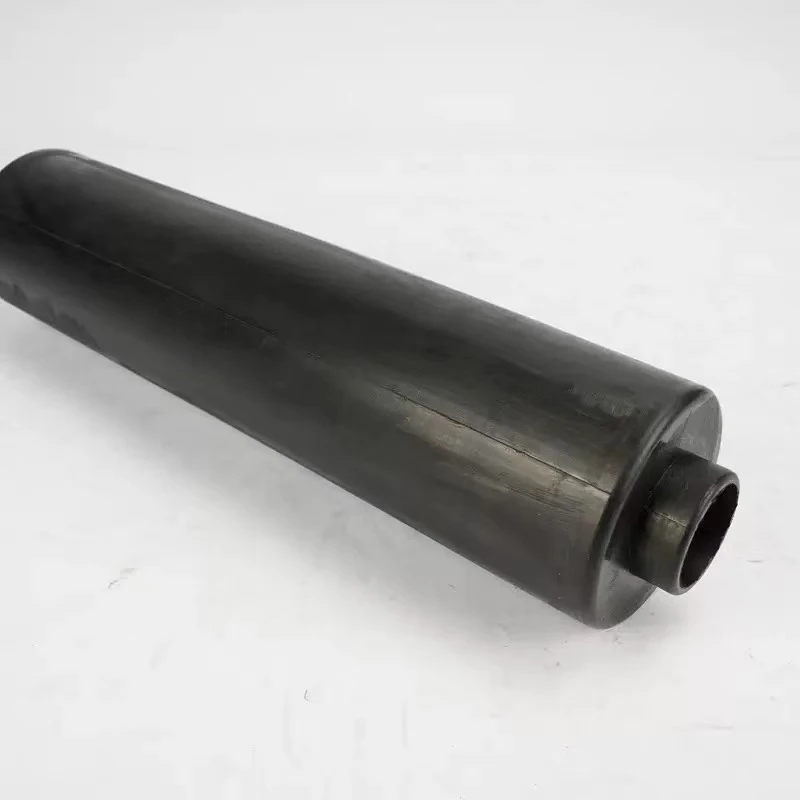
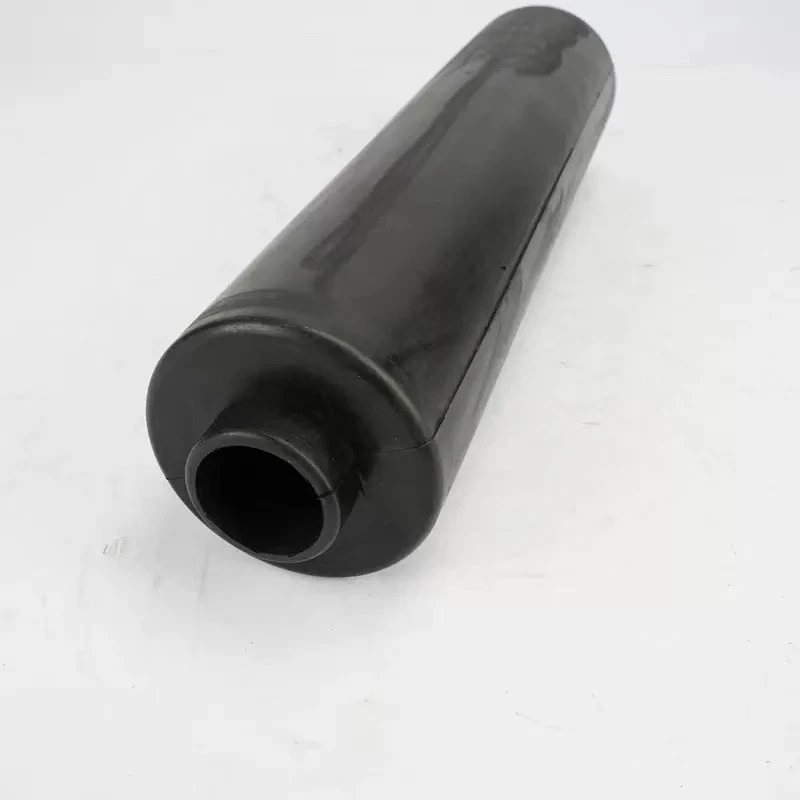
Our factory supplies premium rubber airbag (pneumatic rubber airbag / inflatable rubber bladder / rubber air spring / inflatable actuator) .The body is a straight cylinder rather than a corrugated bellows, so internal pressure expands the wall uniformly and there are no wave troughs where stress concentrates; the one-piece vulcanized neck integrates the inflation port directly into the bag wall, eliminating the leak path that separate fittings create; and the rounded closed end avoids sharp corners that would otherwise become the first failure point under cyclic pressure. The bag can be supplied unreinforced for low-pressure cushioning and sealing duties, or with one or more layers of fabric or cord reinforcement for higher pressure, controlled expansion and longer fatigue life. This makes the same cylindrical form usable as an air spring, a pneumatic actuator, a pipe plugging bladder, an inflatable seal or a pressure accumulator bladder - with diameter, length, wall thickness, port size and pressure rating specified per application.
Full parameters below:
|
Item |
Detailed Parameters |
|
Product Name |
China Rubber Airbag, Cylindrical Pneumatic Rubber Airbag with Inflation Port, Fabric-Reinforced Inflatable Bladder for Air Spring, Actuator, Pipe Plugging & Inflatable Seal, Airtight One-Piece Vulcanized Neck, EPDM/NBR/Silicone, Custom Diameter Length Pressure |
|
Rubber Material |
EPDM (standard for outdoor, water, steam and weather exposure, excellent ozone and UV resistance), NBR (oil and fuel resistance for hydraulic and oily environments), CR/Neoprene (oil, weather and flame resistance), NR (high elasticity for low-pressure cushioning), Silicone VMQ (high temperature and food-grade option), FKM (chemical and high-temperature option); virgin compound with controlled filler, no reclaimed rubber |
|
Dimensions |
Outer diameter 20-300mm; inner diameter 15-250mm; overall length 50-600mm; wall thickness 3-15mm; length-to-diameter ratio typically 2:1 to 5:1 (the stock shape shown is about 3:1); all dimensions customizable per drawing or sample; dimensional tolerance ±1mm on diameter and length |
|
Working Pressure |
Low pressure: 0.02-0.2 MPa (cushioning, sealing, light plugging); medium pressure: 0.2-0.8 MPa (air spring, actuator, pipe plugging); high pressure: 0.8-2.0 MPa (reinforced heavy-duty types); design pressure confirmed per application; do not exceed the rated pressure marked on each bag |
|
Burst Pressure |
Minimum 3x working pressure for unreinforced bags; 4-5x working pressure for fabric-reinforced bags; each production lot sample-tested to burst to verify the safety margin |
|
Hardness (Shore A) |
50-75 Shore A, standard 60±5; softer compounds for low-pressure conformable sealing, firmer compounds for pressure retention and abrasion resistance; tolerance ±5 Shore A |
|
Temperature Range |
EPDM -40 to +120℃ (up to 150℃ short-term); NBR -30 to +100℃; CR -30 to +110℃; Silicone -60 to +200℃; FKM -20 to +230℃; temperature rating depends on compound and reinforcement |
|
Certifications |
ISO 9001, RoHS, REACH, SGS test reports (compound composition, hardness, tensile strength, elongation, tear strength, burst pressure, air tightness, ozone resistance, oil resistance, temperature resistance); FDA food-grade option for silicone; flame-retardant option available |
|
MOQ and Stock |
Standard stock sizes (black EPDM, plain bore port, 2-3 common diameters): MOQ 100 pieces, ships 5-7 days; custom diameter, length, wall thickness or port: MOQ 500-2,000 pieces per size (mold and tooling fee applies, partly refundable for large orders); reinforced or high-pressure types: MOQ 500 pieces; OEM and ODM fully supported |
|
Packaging |
Bulk in PE bags with labels showing part number, material, diameter, length, port size, working pressure, quantity, batch and date; reinforced cartons; fumigation-free export pallets; bags protected from sharp edges and compression during transport; custom retail packaging and carton markings available |
Product Introduction
Rubber Airbag is a flexible pressure element that converts compressed air into force, displacement or sealing contact. Its form is deliberately simple: a straight cylindrical rubber body, one rounded closed end and one raised inflation port. That simplicity is the source of its reliability. A straight cylindrical wall expands uniformly when pressurized, so the bag inflates into a predictable shape instead of bulging at a weak point; there are no corrugation troughs where flexing stress concentrates, which is the main reason bellows-style bladders fail at the folds; and the rounded closed end removes the sharp internal corner where stress would otherwise peak. The raised neck is not a separate fitting screwed or clamped onto the bag - it is vulcanized as one piece with the body, so the inflation port and the pressure boundary are the same material, with no gasket, no thread seal and no joint that can work loose or leak under cyclic pressure.
Inside the wall, the construction can be tailored to the duty. For low-pressure applications - cushioning, light sealing, gentle lifting - an unreinforced compound is sufficient and gives the softest, most conformable response. For air springs, actuators and pipe plugs that must hold 0.2-0.8 MPa or more, one or more plies of polyester or nylon fabric, or synthetic cord, are bonded into the rubber during vulcanization; the reinforcement carries the pressure load, limits radial growth to the designed profile and dramatically extends fatigue life under repeated inflation cycles. Because the reinforcement is bonded rather than inserted, it cannot delaminate or shift. Wall thickness, diameter, length, port bore and compound are all specified together to produce the required pressure-versus-stroke curve: a longer, thinner bag gives more stroke at lower force; a shorter, thicker or more heavily reinforced bag gives higher force with less expansion. This is why the same cylindrical form serves as an air spring, a pneumatic muscle actuator, a pipeline plugging bladder, an inflatable seal or an accumulator bladder, with only the internal construction and dimensions changing.
Core Selling Points
Straight cylindrical wall - uniform expansion, no corrugation stress points: Bellows and corrugated bladders are common, but their folds are exactly where rubber flexes hardest and where cracks begin; every inflation cycle concentrates stress at the same trough lines, so life is limited by fold fatigue. Our bag uses a straight cylindrical wall with a smooth bore. Pressure acts on a uniform surface, the wall expands evenly around the circumference and along the length, and there is no fold to fatigue. The result is predictable inflation geometry, better contact conformity in sealing and plugging duties, and a longer cycle life at the same pressure. The smooth bore also means no dead corners that trap water, slurry or process residue - important for pipe plugging and food or medical applications where cleaning and inspection matter.
One-piece vulcanized inflation port - the pressure boundary has no joint: The raised circular port in the image is molded and vulcanized together with the bag body, not assembled afterwards. This removes the three most common leak paths in inflatable products: the thread seal between a metal or plastic fitting and the rubber, the clamped hose connection, and the gasket face at a flange. With a one-piece neck, the port and the bag are a single continuous rubber pressure boundary, so cyclic pressure cannot loosen a fitting or creep past a seal. The port can still be supplied as plain bore for a hose and clamp, barbed for push-on hose, threaded for a screw-in valve or coupler, or flanged for a bolted connection - but the neck itself remains part of the bag, so the bag-to-fitting interface is the only connection the customer makes, and it is on the outside where it can be inspected.
Fabric and cord reinforcement - higher pressure, controlled expansion, longer fatigue life: Unreinforced rubber holds low pressure well but grows and bulges as pressure rises; reinforcement changes that. One or more plies of woven polyester or nylon fabric, or synthetic cord, are bonded into the wall during vulcanization. The reinforcement carries most of the pressure load, so the bag can hold 0.2-0.8 MPa or more with a burst margin of 4-5x working pressure, expands to the designed diameter instead of ballooning unpredictably, and survives far more inflation cycles before failure. Because bonding happens during cure, the plies cannot separate or migrate. Reinforcement level is selected to the duty: none for gentle cushioning and sealing, one ply for medium-pressure air springs and actuators, multiple plies for high-pressure pipe plugs and heavy lifting.
Customizable pressure-stroke curve - one form, many duties: The bag's behavior is set by geometry and construction together: diameter, length, wall thickness, reinforcement and compound. A long, large-diameter, lightly reinforced bag produces large displacement at modest force - suited to air springs, lifting and cushioning. A short, thick-walled, heavily reinforced bag produces high force with limited stroke - suited to clamping actuators and high-pressure plugs. A bag intended for sealing is sized so that inflation presses the wall against the pipe or hatch surface at low pressure, with enough compliance to conform to surface irregularities. Because we make the tooling and compound in-house, these variables can be tuned in one development cycle rather than compromising on a catalogue size - buyers specify the force, stroke, pressure and medium, and we return a dimensioned proposal with a pressure-stroke estimate.
Multi-material media compatibility - air, water, oil, steam and chemicals: The compound is selected for the medium on both sides of the wall. EPDM handles air, water, steam, ozone and outdoor UV exposure and is the standard for most pneumatic and water-contact duties. NBR resists oil and fuel, making it suitable for oily compressed air, hydraulic environments and fuel-system testing. CR adds oil, weather and flame resistance. NR gives the highest elasticity for low-pressure cushioning. Silicone covers high temperature and food-grade contact. FKM handles aggressive chemicals and higher temperatures. This means the same cylindrical design can be specified for a cleanroom inflatable seal, an outdoor air spring, an oil-exposed actuator or a chemical-line plugging bladder, with the correct compound rather than a compromise.
Solutions for Buyer Concerns
Factory-direct transparent pricing: As an original rubber manufacturer we control compound mixing, fabric or cord reinforcement preparation, mandrel building, molding, vulcanization, trimming, pressure testing and packaging in-house. Tiered volume pricing with no hidden charges. Stock sizes price lowest and ship fastest; custom tooling is quoted separately and partly credited against large orders. Because the one-piece neck removes the need for separate fittings and the reinforcement extends service life, total cost per inflation cycle is lower than assembled bladders and unreinforced bags that fail early.
Rigorous quality inspection and certification: Each lot is checked for compound hardness, tensile strength, elongation and tear strength; dimensions (outer diameter, length, wall thickness, port bore and neck height) to ±1mm; visual inspection for voids, blisters, under-cure, flash and port defects; air tightness by pressure hold or immersion test; burst pressure on sampled units; and reinforcement adhesion by sectioning sampled bags. Full SGS reports, RoHS and REACH declarations and COC with batch traceability support customs clearance and customer audits.
Protective packaging and flexible logistics: Bags are packed in PE bags with part-number, material, size, port, pressure rating, quantity, batch and date labels, then in reinforced cartons and fumigation-free pallets. Bags are kept free of sharp edges and heavy compression in transit, since a crease or cut in the wall becomes a failure point under pressure. Custom retail packaging and carton markings are available. Sea, air and express options balance freight and lead time; stock sizes ship in 5-7 days.
Mandrel building, molding and vulcanization craftsmanship: Cylindrical bags are built on a mandrel: fabric or cord plies are laid up with controlled angle and overlap, the compound is applied, and the assembly is vulcanized so the plies bond into the wall and the port neck forms as one piece. Temperature, time and pressure are controlled to avoid under-cure (weak, tacky walls) and over-cure (brittle, cracked necks). Mandrels are machined in-house to the specified diameter and length, so the inflated shape matches the design. Compared with low-cost bladders (hand-laid plies, inconsistent wall thickness, assembled fittings, no burst test), our bags hold pressure, inflate evenly and last through repeated cycles.
Competitive Advantages and Peer Comparison
Inflatable pressure elements differ mainly in wall construction and how the port is attached. Unreinforced rubber bladders are soft and cheap but grow and bulge as pressure rises, have a low burst margin and fail early under cyclic inflation - acceptable only for very low pressure cushioning. Corrugated or bellows bladders give long stroke at low pressure but concentrate flexing stress at the fold lines, so cracks begin there and life is limited by fold fatigue; they also trap residue in the troughs. Assembled bladders with separate fittings (metal or plastic port clamped, threaded or bonded onto the bag) introduce a joint at the pressure boundary - the most common leak and separation point, especially under cyclic pressure and temperature change. PVC or TPU inflatable bags are light and inexpensive but have limited pressure and temperature capability, creep under sustained load and are vulnerable to punctures and sharp edges. Metal cylinders give high force and precise control but are heavy, expensive, need machined bores and seals, and cannot conform to irregular surfaces. Mechanical springs are simple but have a fixed rate, fixed installed height and no ability to vary force by pressure. None combines a joint-free pressure boundary, uniform expansion, high burst margin, conformability and tunable force-stroke behavior.
Our rubber airbag addresses each of those failure modes directly. The one-piece vulcanized neck removes the bag-to-fitting joint from the pressure boundary, so leaks and separation at the port are eliminated by construction. The straight cylindrical wall expands uniformly and has no fold lines to fatigue, unlike bellows bladders. Fabric or cord reinforcement raises working pressure and burst margin, controls radial growth and extends cycle life, unlike unreinforced bags that bulge and fail. The smooth bore has no dead corners to trap residue, which matters for pipe plugging and hygiene-sensitive duties. And because diameter, length, wall thickness, reinforcement and compound are all made in-house, the force-stroke curve is tuned to the application rather than forced to fit a catalogue part. For vehicle and seat suspension makers, machinery and packaging OEMs, pipeline maintenance contractors, cleanroom and door-seal suppliers and accumulator manufacturers, this means a pressure element that holds air, inflates predictably, conforms to the surface it must seal or lift and survives repeated cycles - replacing heavier cylinders, shorter-lived bellows and leak-prone assembled bladders.
Usage, Installation and Maintenance Instructions
Correct sizing, port connection and pressure control determine whether the airbag delivers its designed force, stroke and service life:
Selection guidelines: Define the duty first: force or stroke (actuator, air spring, lifting), sealing contact (inflatable seal), or flow blocking (pipe plug). Then specify working pressure and medium (air, water, oil, steam), and the required inflated diameter and length. From these, select reinforcement: none for low pressure and conformable sealing; one ply for medium-pressure springs and actuators; multiple plies for high pressure and heavy loads. Select compound for the medium and environment: EPDM for air, water and outdoor; NBR for oil; silicone for high temperature or food contact; FKM for chemicals. Select the port: plain bore with hose clamp for general pneumatic lines, barbed for push-on hose, threaded for a valve or coupler, flanged for a bolted high-pressure connection. Confirm the bag's rated pressure is at least 1.5x the highest pressure the system can produce, including regulator failure or water hammer. For pipe plugging, confirm the inflated diameter exceeds the pipe bore by the recommended interference so the wall seals against the pipe wall.
Installation guidelines: Inspect the bag before installation - no cuts, creases, blisters or damaged port; a crease in the wall becomes a failure point under pressure. Connect the port to the air line using the matching method: for plain bore, insert the hose fully past the barb or onto the neck and clamp with a hose clamp sized to the neck; for threaded ports, use the specified thread sealant and do not over-torque, which can distort the neck; for flanged ports, tighten bolts evenly in a cross pattern. Route the bag so it inflates into free space and is not pinched between sharp metal edges, which will cut the wall. For air springs, mount the bag between flat, parallel plates larger than the inflated diameter so the bag cannot extrude sideways. For pipe plugs, insert the deflated bag to the required depth, then inflate slowly while watching pressure; do not exceed the rated pressure to force a seal. For inflatable seals, position the bag so inflation presses it against the mating surface with uniform contact. Install a pressure regulator and gauge, and a relief valve set below the bag rating, so the bag cannot be over-pressurized by a fault.
Operation and maintenance: Inflate and deflate gradually; pressure spikes from fast valve opening, water hammer or impact loading shorten life. Stay within the rated pressure and temperature - overheating weakens the wall and reduces burst margin. Keep the bag away from oils, solvents and ozone sources unless the compound is specified for them. Inspect periodically for wall swelling, blisters, cracks at the neck, hardening, softening, oil swelling and reinforcement separation; replace the bag when any of these appear, since a weakened wall can burst without warning. Clean with water and mild detergent; avoid aggressive solvents. For pipe plugging, clean and dry the bag after use, and store it deflated and free of residue. Store deflated in a cool, dry, dark place away from ozone sources (motors, welding equipment) and sharp objects; do not stack heavy items on the bag. Shelf life: EPDM/NBR/CR about 3-5 years, silicone about 5 years under proper storage.
Company Strength Display
We are a specialized rubber component manufacturer with extensive OEM/ODM experience in pneumatic rubber airbags, inflatable bladders, air springs, inflatable seals and industrial rubber molded parts for global automotive, machinery, packaging, pipeline, cleanroom and medical markets. Our facility includes compound mixing lines, fabric and cord slitting and calendering equipment, mandrel building stations, compression and injection molding presses, vulcanization ovens and autoclaves, a dedicated pressure and burst test bench, a material laboratory and an in-house QC team - giving us stable capacity and batch consistency for orders from 100 pieces to full container loads.
- Production capacity: Daily output 5,000+ bags depending on size, plus molded rubber parts; mandrel building and vulcanization in-house; stock sizes ship in 5-7 days; new tooling and mandrels in 10-20 days. Capability covers unreinforced bags, single and multi-ply fabric-reinforced bags, cord-reinforced high-pressure bags and one-piece port necks.
- Certification system: ISO 9001 quality system; RoHS and REACH declarations; SGS test reports covering compound composition, hardness, tensile, elongation, tear, burst pressure, air tightness, ozone and oil resistance and temperature resistance; FDA food-grade option for silicone; flame-retardant option. Documentation supports customs clearance and supplier audits in Europe, North America, Southeast Asia and the Middle East.
- R&D and customization: Engineering support for diameter, length, wall thickness, port type and position, reinforcement lay-up and compound selection, plus pressure-stroke estimation from the specified duty. Prototypes in 10-20 days. Free material and design consultation with DFM feedback on tooling, cost and manufacturability.
- Packaging capability: PE bags with full part identification, reinforced cartons, export pallets, custom labels and carton markings, retail packaging on request. Bags protected from sharp edges and compression in transit; OEM bulk packaging and JIT delivery for assembly lines.
Pre-sales and After-sales Service
Pre-sales Service
Our sales team advises on duty definition (force, stroke, sealing or plugging), working pressure and medium, reinforcement level, compound selection for media and environment, diameter, length and wall thickness, port type and position, inflated-versus-deflated dimensions and installation constraints. We provide free engineering consultation and, where useful, a dimensioned proposal with an estimated pressure-stroke curve before tooling is committed. Samples of stock sizes can be supplied for fit and function testing; custom prototypes are available in 10-20 days. Regulatory documentation (RoHS, REACH, SGS, FDA) is provided on request. For equipment OEMs we support design integration - recommending bag geometry, port routing and pressure control during product development to optimize force, stroke, life and cost. For large OEM customers: dedicated account management, consignment stock, JIT delivery and continuous improvement programs.
After-sales Service
We stand behind every shipment. For confirmed factory-caused defects - wall voids or blisters, under-cure, port neck defects, dimensional error, reinforcement separation, air leakage at the neck, or burst below the rated margin - we replace or refund. Support covers selection, installation, pressure control, maintenance and troubleshooting: matching reinforcement to pressure, sizing the bag for a required force or stroke, choosing compound for oil, water, steam or outdoor exposure, connecting plain, barbed, threaded or flanged ports without distorting the neck, preventing creases and sharp-edge contact, setting regulators and relief valves, resolving leaks at the hose connection, and extending cycle life. For OEM customers: dedicated account management, production priority, proactive material notifications, consignment stock and JIT delivery. For distributors: marketing assets (images, videos, certificates, size charts, selection guides, SDS) and listing optimization support. Every lot is inspected and traceable by batch; contact support with order number, batch number and photos for prompt resolution.
FAQ
Q1: What working pressure can this rubber airbag hold?
A1: It depends on reinforcement. Unreinforced bags suit 0.02-0.2 MPa for cushioning and sealing; single-ply fabric bags 0.2-0.8 MPa for air springs, actuators and pipe plugs; multi-ply cord bags 0.8-2.0 MPa. Burst margin is at least 3x for unreinforced and 4-5x for reinforced bags. Tell us your working pressure and duty and we specify the construction.
Q2: Why is the inflation port one-piece instead of a fitted connector?
A2: A one-piece vulcanized neck makes the port and bag a single continuous rubber pressure boundary, so there is no thread seal, clamped joint or gasket to leak or loosen under cyclic pressure. The customer connects a hose or valve to the outside of the neck only, where the connection is visible and serviceable.
Q3: Which material should I choose for my medium?
A3: EPDM for air, water, steam and outdoor UV exposure (standard). NBR for oil and fuel contact. CR for oil, weather and flame resistance. NR for maximum elasticity in low-pressure cushioning. Silicone for high temperature up to 200℃ or food-grade contact. FKM for aggressive chemicals and up to 230℃. Specify the medium on both sides of the wall when ordering.
Q4: How do I size a bag for an air spring or actuator?
A4: Start from the duty: required force or stroke, working pressure, and available space. Effective area and stroke are set by inflated diameter and length; wall thickness and reinforcement set how much the bag grows and how much pressure it holds. Send the force, stroke, pressure and installation dimensions, and we return a dimensioned proposal with an estimated pressure-stroke curve.
Q5: Can you customize diameter, length, port and reinforcement? What is the MOQ?
A5: Yes. Outer diameter 20-300mm, length 50-600mm, wall thickness 3-15mm, port bore 6-25mm, plain/barbed/threaded/flanged port, one or both ends; unreinforced, single-ply or multi-ply reinforced; EPDM, NBR, CR, NR, silicone or FKM. MOQ: stock sizes 100 pieces, ships 5-7 days; custom size 500-2,000 pieces per size (tooling fee, partly refundable); reinforced or high-pressure types 500 pieces. Custom lead time 10-20 days including tooling. OEM and ODM supported.
Why Choose Our Rubber Airbags
- One-piece vulcanized inflation port - no joint at the pressure boundary: The neck is molded and cured with the bag body, eliminating thread seals, clamped fittings and gaskets that leak or loosen under cyclic pressure. Only the outside hose or valve connection remains, where it can be inspected and serviced.
- Straight cylindrical wall - uniform expansion, no fold fatigue: Smooth non-corrugated body expands evenly, avoids the stress concentration and residue traps of bellows bladders, and gives predictable inflated geometry for sealing and plugging.
- Fabric and cord reinforcement - higher pressure, controlled growth, longer life: Bonded plies carry the pressure load, hold 0.2-2.0 MPa depending on construction, keep radial expansion to the design profile and extend cycle life. Bonded during cure, so plies cannot delaminate.
- Tunable pressure-stroke curve from in-house tooling: Diameter, length, wall thickness, reinforcement and compound are specified together to match required force, stroke and pressure - not forced to fit a catalogue size. Dimensioned proposal with pressure-stroke estimate before tooling.
- Six compounds for air, water, oil, steam, chemicals and temperature: EPDM, NBR, CR, NR, silicone and FKM cover outdoor, oily, high-temperature, food-grade and chemical duties, so the same cylindrical design suits pneumatic, hydraulic, sealing and plugging applications.
- Proven quality and factory-direct partnership: In-house compounding, mandrel building, molding, vulcanization, air tightness and burst testing; ISO 9001, RoHS, REACH, SGS and FDA options. Stock in 5-7 days, MOQ 100 pieces, custom tooling in 10-20 days. Free consultation, samples, JIT delivery and responsive after-sales.
Hot Tags: rubber airbag, China rubber airbag manufacturers, suppliers, factory
Previous
No InformationNext
Rubber Foot PadYou Might Also Like


Send Inquiry