When it comes to the performance and longevity of oil seal rings, choosing the right lubricant is of paramount importance. As a leading supplier of oil seal rings, I've witnessed firsthand how the appropriate lubricant can enhance the functionality of these crucial components. In this blog, I'll delve into the different types of lubricants suitable for oil seal rings, discussing their properties, advantages, and applications.
Mineral Oil - Based Lubricants
Mineral oil - based lubricants are one of the most commonly used types for oil seal rings. These lubricants are derived from crude oil through a refining process. They offer several benefits that make them a popular choice in many industrial applications.
One of the key advantages of mineral oil - based lubricants is their relatively low cost. This makes them an economical option for large - scale manufacturing and general industrial use. They also have good lubricating properties, reducing friction between the oil seal ring and the mating surface. This helps to prevent wear and tear on the seal ring, extending its service life.
Mineral oil - based lubricants have a wide operating temperature range. They can function effectively in moderate temperature environments, which is suitable for many common industrial settings. However, they do have some limitations. They are not as resistant to oxidation as some synthetic lubricants, which means they may break down over time, especially in high - temperature or high - stress applications.
In applications where the operating conditions are relatively mild, such as in some automotive engines with normal operating temperatures and pressures, mineral oil - based lubricants can be a great choice for oil seal rings. For example, in older model cars with less demanding engine requirements, these lubricants can provide adequate protection for the oil seal rings.
Synthetic Lubricants
Synthetic lubricants are engineered in a laboratory to have specific properties. They offer several advantages over mineral oil - based lubricants, especially in more demanding applications.
One of the main benefits of synthetic lubricants is their excellent thermal stability. They can withstand much higher temperatures without breaking down compared to mineral oils. This makes them ideal for high - performance engines, such as those in racing cars or heavy - duty industrial machinery. In these applications, the oil seal rings are exposed to extreme heat, and a synthetic lubricant can ensure that the seals remain effective and do not degrade due to high temperatures.
Synthetic lubricants also have better oxidation resistance. They are less likely to form sludge and deposits over time, which helps to keep the oil seal rings clean and functioning properly. This can lead to longer service intervals and reduced maintenance costs.
Another advantage of synthetic lubricants is their superior low - temperature performance. They have a lower pour point, which means they can flow more easily at cold temperatures. This is important in applications where the equipment may be exposed to cold weather, such as in outdoor machinery or in some aerospace applications.
However, synthetic lubricants are generally more expensive than mineral oil - based lubricants. This cost factor may limit their use in some applications where the operating conditions are not extremely demanding.
Grease - Based Lubricants
Grease - based lubricants are a thick, semi - solid lubricant that is often used for oil seal rings. Grease is made by mixing a base oil with a thickening agent, such as a soap.
One of the main advantages of grease - based lubricants is their ability to stay in place. Unlike liquid lubricants, grease adheres to the surface of the oil seal ring and the mating part, providing long - lasting lubrication. This is particularly useful in applications where the seal ring is in a static or slow - moving position, as it helps to prevent the lubricant from leaking out.
Grease - based lubricants also offer good protection against contaminants. They can act as a barrier, preventing dirt, dust, and water from reaching the oil seal ring and causing damage. This makes them suitable for applications in dirty or wet environments, such as in construction equipment or agricultural machinery.
However, grease has some limitations. It has a higher viscosity compared to liquid lubricants, which means it may not be as effective in high - speed applications. The thick consistency of grease can also make it difficult to distribute evenly in some complex systems.
Silicone - Based Lubricants
Silicone - based lubricants are another option for oil seal rings. These lubricants are made from silicone polymers and offer unique properties.
Silicone lubricants have excellent chemical resistance. They are resistant to many chemicals, including acids, bases, and solvents. This makes them suitable for applications where the oil seal rings are exposed to harsh chemical environments, such as in the chemical processing industry.
They also have good temperature stability. Silicone lubricants can operate over a wide temperature range, from very low to very high temperatures. This makes them versatile for use in different industrial applications, including those in extreme environments.
In addition, silicone lubricants have a low surface tension, which means they can spread easily and provide a smooth, even coating on the oil seal ring. This helps to reduce friction and wear.
However, silicone lubricants may not be compatible with all types of rubber used in oil seal rings. Some types of rubber may swell or degrade when in contact with silicone lubricants. Therefore, it's important to ensure compatibility before using silicone - based lubricants.
Factors to Consider When Choosing a Lubricant
When selecting a lubricant for oil seal rings, several factors need to be considered:
- Operating Temperature: As mentioned earlier, different lubricants have different temperature ranges. The lubricant should be able to function effectively within the temperature range of the application.
- Chemical Compatibility: The lubricant must be compatible with the material of the oil seal ring. For example, some elastomers used in seal rings may react with certain lubricants, leading to degradation.
- Load and Speed: High - load and high - speed applications require lubricants with better anti - wear and high - speed performance. Grease may not be suitable for high - speed applications, while synthetic lubricants are often a better choice.
- Environmental Conditions: If the application is in a dirty, wet, or chemically - harsh environment, the lubricant should have appropriate protection properties.
As an oil seal ring supplier, we understand the importance of choosing the right lubricant for your specific needs. We offer a wide range of high - quality oil seal rings, including EPDM O Rings, which are suitable for various applications. Our products are designed to work in conjunction with different types of lubricants to ensure optimal performance.
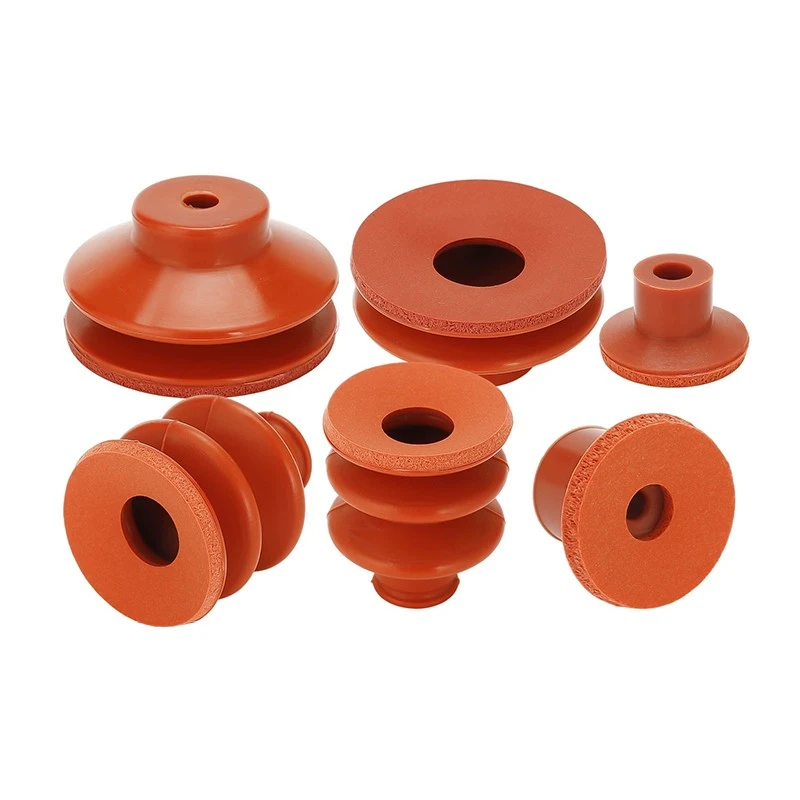
In addition to our oil seal rings, we also supply related silicone products such as Silicone Rubber Transformer Bushings and Silicone Sucker. These products are manufactured to the highest standards and can be used in a variety of industrial settings.
If you're looking for high - quality oil seal rings and need advice on the suitable lubricant, we're here to help. Our team of experts can provide you with detailed information and guidance based on your specific application requirements. Contact us today to start a discussion about your procurement needs and let us help you find the best solutions for your business.

References
- "Lubrication Fundamentals" by John W. Murphy
- "Handbook of Lubrication and Tribology, Volume I: Applications" edited by Bharat Bhushan